The COAL Guide is an open access legal citation guide for anyone who cites legal materials. This award-winning guide was originally published in June 2024 and incorporates feedback contributed by reviewers from Canadian courts, law firms, law journals, law societies, and law schools. An updated version of the guide that includes expansions based on user feedback was published in July 2025 and a French version is coming soon. Explore the COAL Guide on CanLII for writing, editing, or teaching.
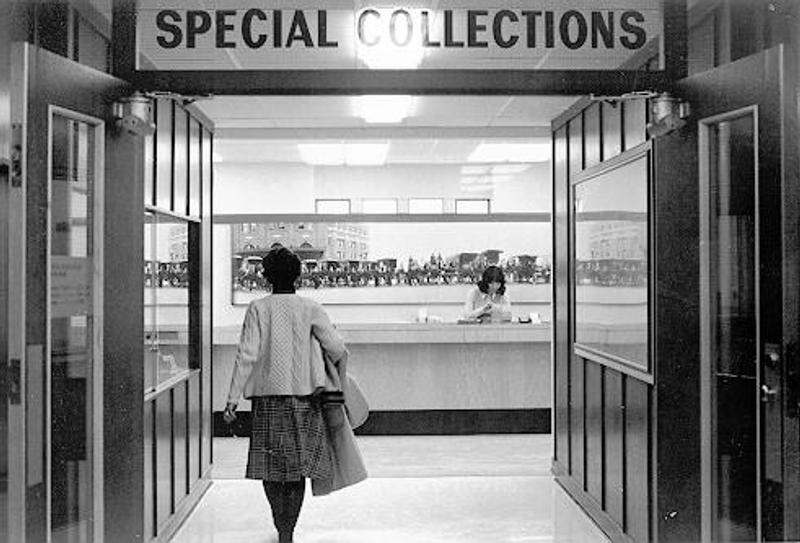
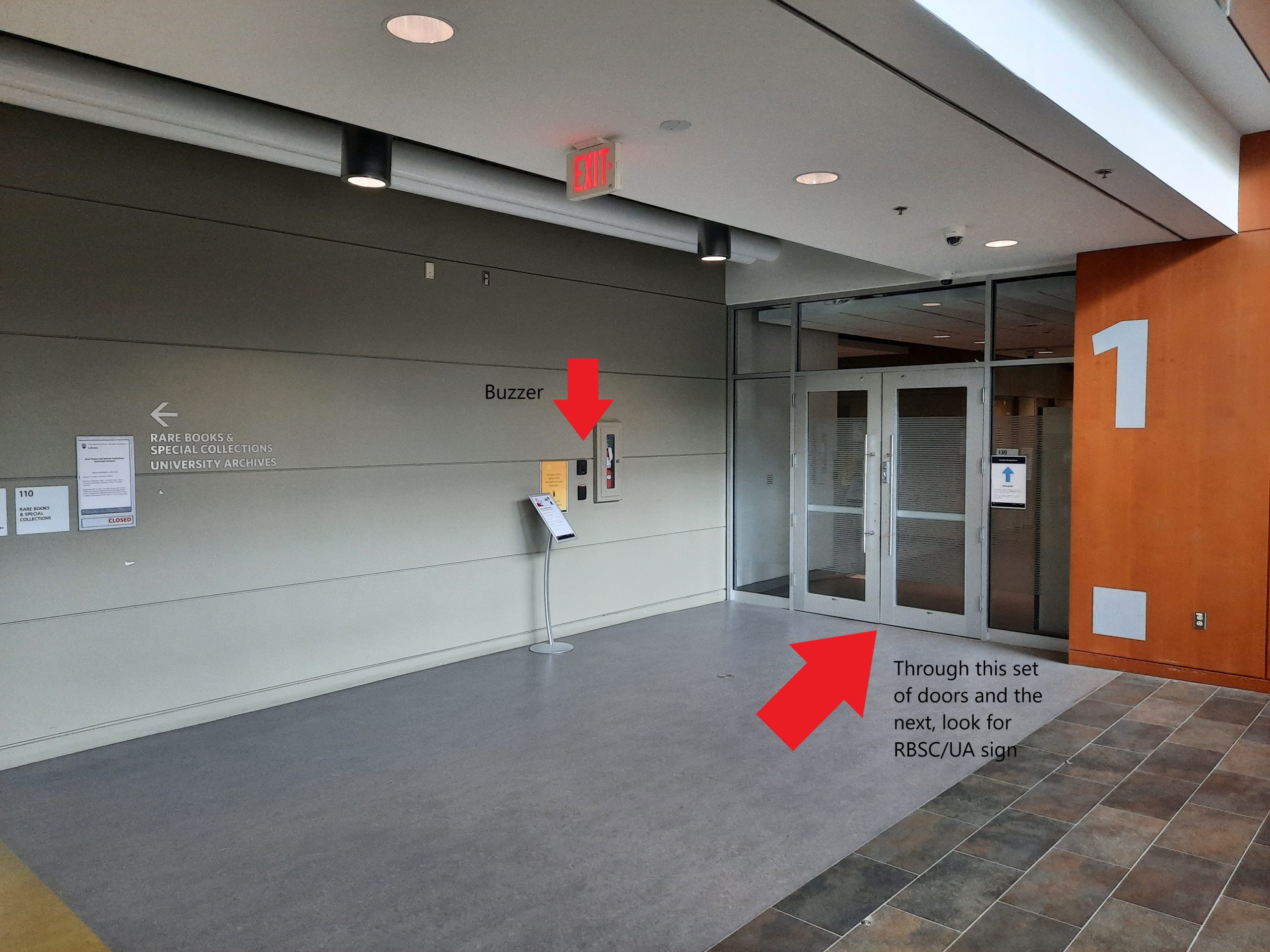
Entrance to Special Collections. UBC Archives Photograph Collection. UBC 1.1/15912
The Rare Books and Special Collections and University Archives Reading Room will be closed on Tuesday, June 10, for staff training. Normal satellite reading room hours will resume on Wednesday, June 11. We apologize for any inconvenience!
Recently the Scholarly Communications and Copyright Office released its 2022/2023 Impact and Activity Report, showcasing some of the year’s highlights and accomplishments.
The Scholarly Communications and Copyright Office released this year’s Open Education Impact & Activity Report, highlighting UBC Library’s combined impact on open educational practices at UBC for 2022/2023. For more information, or to share feedback please contact open.ubc@ubc.ca.
Rare Books and Special Collections and University Archives is currently operating out of a satellite reading room.
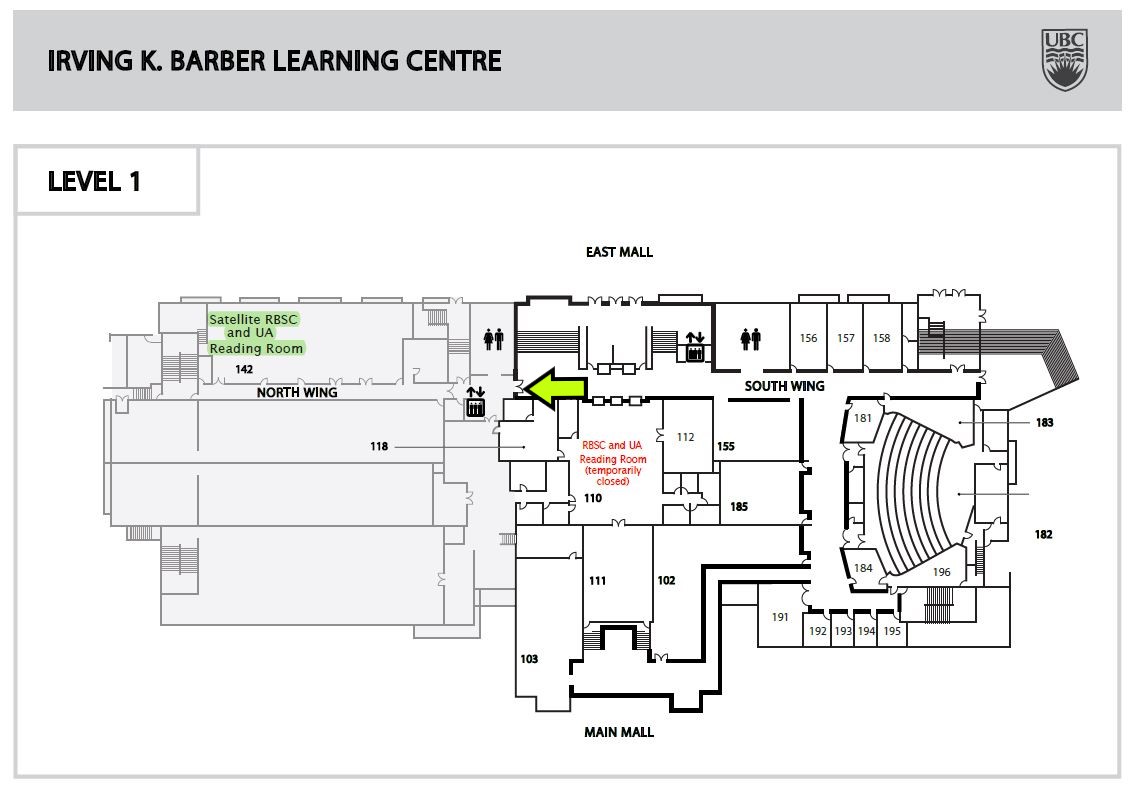
Due to ongoing upgrades, the Rare Books and Special Collections and University Archives Reading Room has temporarily relocated down the hall to Irving K. Barber Learning Centre room 142.
Reading Room hours for Summer Term I (May – June, 2025) will be Monday-Friday, 10 a.m.-2 p.m. Scheduled class visits will be accommodated outside of public reading room hours.
To make your visit more efficient and to ensure that materials are available, please contact Rare Book and Special Collections or University Archives with your materials request before visiting the satellite reading room.
UBC librarians are embarking on a new collaborative research project that aims to address a fundamental problem in how open educational practices approach Indigenous Knowledges, and instead replicate colonial concepts of ownership and knowledge transfer.
The research project, titled Foregrounding Indigenous Perspectives: Community and Collaborator Affinities and Conflicts in Open Education, was recently awarded a grant by the Canadian Association of Research Libraries (CARL). The Practicing Librarian Grant, awarded by CARL’s Strengthening Capacity Committee, supports Canadian research in the field of academic librarianship for projects that use structured, evidence-based research to tackle real-world issues.
“I’ve been a part of a number of provincial and national open education committees and working groups, and there is always a struggle when discussions about Indigenous communities’ interest and engagement in open education arises,” says Erin Fields, principal investigator and Open Education and Scholarly Communications Librarian at UBC Library. “My hope for this project is to have some sense of how we can engage in open education practices that are grounded in research on Indigenous perspectives. This will be able to unearth our gaps in understanding and balance our advocacy efforts with research-informed practice.”
The project group includes co-investigators from UBC’s Vancouver and Okanagan campuses as well as Toronto Metropolitan University and BCcampus. Together, the group will identify gaps in the open education communities’ understanding of Indigenous perspectives through surveys of OER creators and interviews with Canadian Indigenous faculty, academic educators, librarians and others involved in the creation of OER and OER initiatives at various universities and colleges.
“From our findings, we will be able to provide suggestions for people working within open education on how they can engage respectfully with Indigenous communities and Knowledge Keepers and, in doing so, we can help to eliminate the colonial violence being done to Indigenous communities within open education and the broader field of education,” says Donna Langille, Community Engagement and Open Education Librarian at UBCO Library.
“There are a lot of complexities in regards to Indigenous Knowledges and how they are shared, so it’s great to have a group of advocates who can come together to begin to address the concerns that many communities have, while thinking more within a national scope,” says Kayla Lar-Son, Indigenous Programs and Services Librarian at Xwi7xwa Library. “This grant allows us to support Indigenous communities in an area where they are often forgotten and in a way that makes sense with their own protocols and uplifts their voices.”
This project is part of UBC Library’s strategic direction to engage with communities.